Purpose: To compare the efficacy of transversus abdominis plane (TAP) block technique versus port site infiltration of local anesthetic for postoperative pain relief following laparoscopic partial nephrectomy (LPN).
Methods: A retrospective review was conducted prospectively collected data of patients with renal masses who underwent LPN and were administered with one of the two pain control techniques between 2015 and 2019. Patients were divided into 2 groups based on analgesic method administered. Postoperative pain was measured by visual analogue scale (VAS) and the amount of analgesic usage during hospital stay and after discharge.
Results: Of 72 patients analyzed, 35 received TAP block (Group 1), and 37 patient Local wound infiltration (Group 2) after LPN. On postoperative day (POD) 1 the Median pain intensity was 2.3 (0-6) and 4.1 (0-6) in groups 1 and 2, respectively (p <0.05). On POD 2 the median pain intensity was 1.5 (0-8) and 2.8 (0-8) in Groups 1 and 2, respectively (p <0.05). The mean number of analgesic doses given was 1.2 ± 0.4 and 2.2 ± 0.3 on POD1, and 0.7 ± 0.3 and 1.54 ± 0.5 on POD2 in groups 1 and 2, respectively (p<0.05).
Conclusion: TAP block appears to be a more effective method for pain control after LPN than port site infiltration by local anesthetic.
Kidney tumors, Pain, TAP block, Wound Infiltration
LPN: Laparoscopic Partial Nephrectomy; TAP block: Transversus Abdominis Plane Block; VAS: Visual analogue scale
Laparoscopic partial nephrectomy (LPN) is a well-established minimally invasive management option for renal masses [1]. Compared to its open counterpart, LPN has been shown to have lower estimated blood loss, shorter hospitalization time, and reduced postoperative pain [2]. However LPN, is still associated with pain in the postoperative period [3]. Pain is an important aspect of perioperative anesthetic care, and the use of analgesic treatment is aimed at facilitating early postoperative recovery.
Subcutaneous wound infiltration with local anesthetics of port sites is routinely done after LPN for postoperative pain control since it is efficacious and side effects are minimal [4]. A disadvantage of local anesthetic infiltration, it’s limitation in duration of action, which require additional drugs to prolong their action.
Transversus abdominis plane (TAP) block is another attractive method for postoperative pain control following abdominal surgery, which is done by injecting local anesthetic into the plane between the internal oblique and the transversus abdominis muscle. This method has been shown to reduce postoperative pain, and decreased use of opioids following abdominal surgery such as in hysterectomy, appendectomy and caesarean section [5,6].
To date, a comparison between the two modalities in laparoscopic urologic surgery is lacking. We aimed to compare TAP blocks versus wound infiltration for postoperative pain control in patients undergoing LPN.
It is a single-institutional study; data were obtained retrospectively from a prospective institutional registry of consecutive patients who underwent LPN between May 2015 and March 2019. Patients in Group 1 were administered TAP block, whereas Group 2 was administered local wound infiltration. Patients undergoing concomitant surgery or extraperitoneal approach were excluded from the study.
We transitioned to preferentially perform TAP blocks for pain control. Most of the earlier patients received infiltration whereas most of the latter patient received TAP blocks, based on availability of an anesthesia provider with expertise with TAP blocks.
Injection solution in both groups contained a total of 20ml 50/50 mixture of 2% lidocaine and bupivacaine 0.5%. This study was approved by the local Institutional Ethics Committee.
Initial anesthetic technique
All patients received general anesthesia using propofol, fentanyl and vecuronium for induction and sevoflurane for maintenance.
Surgical technique
Our surgical technique has been previously reported [7,8]. Briefly, the patient is placed in lateral decubitus with the operated side faced up. We use the standard transperitoneal approach with three to five trocars (5,12 mm) placed in the upper quadrant of the operated side. First trocar is placed using the open Hasson technique, remainder of ports are placed under visual guidance. In majority of cases warm ischemia was achieved by renal artery clamping only. After tumor resection, the defect closed using a continuous running absorbable sutures, and LapraTY® clips as previously reported [7]. A closed suction drain is left through one of the ports. The specimen is entrapped in an EndoCatch bag and extracted through the 12mm port site that is extended as necessary. Fascia is closed routinely on all port sites ≥ 10 mm using the Endoclose TM device. Skin is re-approximated using subcuticular sutures.
TAP block technique
At the completion of partial nephrectomy, a unilateral (operated side) TAP block was performed. A high-frequency linear US transducer was placed in the transverse plane at the mid-axillary line between the lower costal margin and the iliac crest (Figure 1). The subcutaneous fat, external and internal oblique muscle (IO), transverse abdominal muscle (TA) and peritoneal cavity were visualized. A 22G needle was then placed in the plane, advancing from medial to lateral into the space between IO and TA where the thoracolumbar nerves T10-L1 are positioned. After aspiration, we injected 1 ml of study solution and only when the satisfactory needle placement was identified, as visualized by the operator as a hypo-echoic lens shaped space between IO and TA, the total of 20 ml of anesthetic injected [9] (Figure 2). At the beginning the procedure was performed by anesthesiologists but after a short learning curve also the urologists performed TAP block. The mean time for TAP blocks procedure 20 minutes.
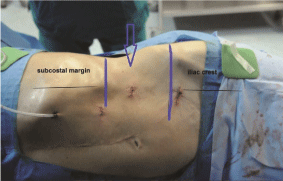
Figure 1. US transducer placed in the transverse plane at the Mid-Axillary line between the Lower Costal Margin and the Iliac Crest
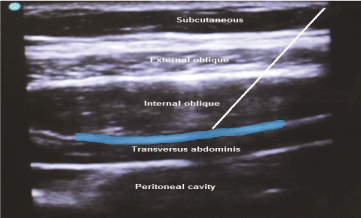
Figure 2. Injection of anesthetic solution between Internal Oblique and Transversus Abdominis muscle
Wound infiltration technique
All patients in this group received subcutaneously infiltration of 20ml 50/50 mixture of 2% lidocaine and bupivacaine 0.5% by the surgeon in a standard fashion to all port sites.
Postsurgical Analgesia Protocol
Postsurgical pain control relies on-demand administration of dipyrone (1g IV) and acetaminophen (1g IV) for mild and severe pain, respectively, based on visual analogues pain scale assessed routinely in the postoperative period. This institutional protocol was unchanged during the study period.
Postoperative Measurement and Endpoints
In the postoperative period, all patients were routinely prescribed on-demand analgesic drugs, such as IV acetaminophen (1g) or IV dipyrone (1g). No narcotics were routinely prescribed. Postoperative pain level was measured once every 4 h using visual analogue scale (VAS from 0- no pain to 10- maximal pain) along with routine vital signs assessment. The VAS is a well validated tool in the assessment of acute pain [10]. The pain score was the averaged for the postoperative day (POD) for analysis.
We compared postoperative pain intensity on POD1 and 2 as well as additional analgesic consumption (number of doses) during the hospital stay and post-discharge between the 2 groups. Analgesic use upon discharge was reported by the patients during the postoperative follow-up approximately 2 weeks postoperatively.
Statistics
Data were analyzed using SPSS version 16 (SPSS Inc., Chicago, Illinos, USA). Continuous data were summarized as mean, standard deviation, were compared with unpaired student’s t-test (Age, duration of surgery, ASA score). Analysis of non-parametric data was done with Mann-Whitney U test to compare VAS scores and analgesic consumption. P-Value <0.05 was considered statistically significant.
A total of 72 patients were included in the study. Patient’s mean age was 58 years old (range 35-81), and 49 (68%) were men. There were 35 patients in Group 1 (TAP block) and 37 patients in Group 2 (wound infiltration). Patient’s characteristics are detailed in Table 1. None of the surgeries was converted to open.
Table 1. Patient's characteristics
|
Parameter
|
TAP Group
5n = 3
|
WI Group
n = 37
|
P value
|
|
Mean age, years
|
58.1 ± 4.8
|
61.2 ± 3.6
|
0.222
|
|
Mean operative time, min
|
195.5 ± 12.2
|
193.2 ± 9.6
|
0.401
|
|
Mean Tumor size, cm
|
6.3 ± 1.3
|
4.6 ± 1.4
|
0.362
|
|
Mean weight (kg)
|
64.85 ± 9.15
|
65.73 ± 5.6
|
0.06
|
|
Mean BMI (Kg2/m2)
|
24.32 ± 2.45
|
24.57 ± 2.05
|
0.234
|
|
ASA 1
|
17 (48%)
|
13 (27.2%)
|
0.50
|
|
ASA 2
|
11 (32%)
|
15 (39.4%)
|
0.403
|
|
ASA 3
|
7 (20%)
|
9 (33.4%)
|
0.167
|
Pain scores and comparisons are summarized in Table 2. Both on POD 1 and 2, pain scores were lower in TAP block group (p<0.05). Similarly, additional analgesic consumption was lower in the TAP block group versus wound infiltration group on POD 1 1.2 ± 0.4 vs 2.2 ± 0.3, p=0.06 and POD 2 0.7 ± 0.3 vs 1.5 ± 0.5, p<0.05, respectively.
Table 2. Comparison of pain control outcomes between TAP block and wound infiltration
|
|
Group 1 TAP block
|
Group 2 Wound infiltration
|
P Value <0.05
|
|
No. of patients
|
35 (48.6%)
|
37 (51.4%)
|
0.482
|
|
Median VAS on POD1
|
2.3 (0-6)
|
4.1 (0-6)
|
<0.05
|
|
Median VAS on POD2
|
1.5 (0-8)
|
2.8 (0-8)
|
<0.05
|
|
Mean no. of analgesic doses given on POD1
|
1.2 ± 0.4
|
2.2 ± 0.3
|
0.06
|
|
Mean no. of analgesic doses given on POD2
|
0.7±0.3
|
1.54 ± 0.5
|
<0.05
|
|
Patients who reporting analgesic use post-discharge
|
3 (12%)
|
13 (39.4%)
|
<0.05
|
Post discharge, 88% of patients in group 1 did not report additional analgesic use compared to 60.6% in group 2, p<0.0.5. All the patients that required analgesic treatment in both groups received only acetaminophen and dipyrone.
No patient in either group required narcotic drugs for pain management.
TAP block is an anesthetic technique that is used for postoperative pain control during the last decade, with analgesic effect lasting for several hours (0-12 h) [11]. Some advocate the addition of dexamethasone to bupivacaine in TAP block to further prolong the duration of the block [12]. Using the technique mentioned earlier, at our impression, TAP block as compared to local wound infiltration, not only decrease analgesic consumption during the first 24 to 48 hours, but also improves the postoperative analgesic effects, enhances recovery.
Chronic postoperative pain is an important adverse consequence of surgery. Acute pain due to surgery or even incision can initiate series of neurochemical reactions which can lead to sensitization in CNS and increase the threshold for pain. Topal, et al. [13] demonstrated a decrease in chronic postoperative pain, in patients receiving TAP block after inguinal herniorrhaphy compared with spinal and general anesthesia. Assuming TAP block has a positive effect on reduction of chronic postoperative pain incidence.
Several studies compared the efficacy of TAP block and wound infiltration in different surgical procedure with mixed results. Our findings are in line with a prior report in laparoscopic colorectal surgery that suggested the ability of TAP block to efficiently control postoperative pain and reduce consumption of analgesics drugs [14]. Hosgood, et al. [15] reported a similar result that TAP block efficient in reducing postoperative pain and the need of analgesics drug when they compared TAP block versus placebo in live- donor nephrectomy. Dudderidge, et al. [16] confirms our outcomes in reducing the need of analgesic treatment when they verified the efficacy of TAP block after laparoscopic radical prostatectomy.
From the other hand, our findings are not in line with prior report in caesarean section that fails to demonstrate the efficacy of TAP block compared with wound infiltration [17]. Skjelsager, et al. [18]. fail to demonstrate the superiority of TAP block in reducing pain and analgesic need postoperatively when they compared TAP block with Wound infiltration in a single urologic comparison study after open radical prostatectomy. In addition, Tawfik, et al. [19] does not find any different in pain score compared to wound infiltration.
To our knowledge, this analysis is the first comparison study made to compare TAP blocks versus local wound infiltration in patients undergoing LPN. Our study demonstrates TAP block superiority compared to local wound infiltration in postoperative pain control following LPN. In fact, pain scores in the TAP group were significantly lower, and were consistent throughout the hospital stay. In addition, we found that patients receiving TAP block consumed less additional on demand analgesics both during hospital stay and after discharge.
This study has several limitations. The retrospective nature of the study should certainly be considered. Our results should stimulate further research and potentially extending into a randomized controlled trial. In addition, there was no randomization, and inherent biases are possible. Furthermore, due to small numbers of patients we could not explore the effect of number of ports or the size of the extraction site on the efficacy of these analgesic techniques. Finally, post-discharge analgesic consumption was patient reported and is subject to recall bias.
With the afore-mentioned limitation in mind, the results of our study suggest that TAP block provides an advantage over standard subcutaneous infiltration in terms of postoperative pain control and on-demand analgesic consumption.
We believe that the use of TAP blocks should be expanded in urologic minimally invasive surgery.
TAP block appears to be a more effective method for pain control after LPN compared to local wound infiltration analgesia, which reduces pain and analgesic drug usage post-operatively and after discharge.
T. Taha – Project development, Data collection, Statistical analysis and Manuscript writing.
B. Sionov- Data collection.
P. Rosenberg – Data collection.
A. Stien – Data collection.
M. Tsivian – Manuscript editing.
A. Sidi – Manuscript editing.
A. Tsivian – Project development, Data collection and manuscript Editing.
Acknowledgment
We would like to thank our head of department for his help and support. Also, we would thank the anesthetic group and the nurse staff for their communication and help to get this work done.
None
The authors declare that they have no potential conflict of interest to declare.
This retrospective study was approved by the institutional Review Board of the Israeli Medical committee (No. 0176-19-WOMC).
- Van Poppel H, Da Pozzo L, Albrecht W, Matveev V, Bono A, et al. (2011) A prospective, randomised EORTC intergroup phase 3 study comparing the oncologic outcome of elective nephron-sparing surgery and radical nephrectomy for low-stage renal cell carcinoma. Eur Urol 59: 543-552.
- Gill IS, Kavoussi LR, Lane BR, Blute ML, Babineau D, et al. (2007) Comparison of 1,800 laparoscopic and open partial nephrectomies for single renal tumors. J Urol 178: 41-46.
- Hager B, Herzog SA, Hager B, Sandner-Kiesling A, Zigeuner R, et al. (2019) Comparison of early postoperative pain after partial tumour nephrectomy by flank, transabdominal or laparoscopic access. Br J Pain 13: 177-184.
- Rawal N, Axelsson K, Hylander J, Allvin R, Amilon A, et al. (1998) Postoperative patient-controlled local anesthetic administration at home. Anesth Analg 86: 86-89.
- Johns N, O'Neill S, Ventham NT, Barron F, Brady RR, et al. (2012) Clinical effectiveness of transversus abdominis plane (TAP) block in abdominal surgery: a systematic review and meta-analysis. Colorectal Dis 14: e635-642.
- Abdallah FW, Halpern SH, Margarido CB (2012) Transversus abdominis plane block for postoperative analgesia after Caesarean delivery performed under spinal anaesthesia? A systematic review and meta-analysis. Br J Anaesth 109: 679-687.
- Tsivian A, Tsivian M, Benjamin S, Sidi AA (2012) Simplified hemostatic technique during laparoscopic partial nephrectomy. Int Braz J Urol 38: 84-88.
- Tsivian M, Tsivian E, Stanevsky Y, Bass R, Sidi AA, et al. (2017) Laparoscopic partial nephrectomy for tumors 7cm and above. Perioperative outcomes. Int Braz J Urol 43: 857-862.
- Jakobsson J, Wickerts L, Forsberg S, Ledin G (2015) Transversus abdominal plane (TAP) block for postoperative pain management: a review. F1000Res 26: 1359.
- Facco E, Stellini E, Bacci C, Manani G, Pavan C, et al. (2013) Validation of visual analogue scale for anxiety (VAS-A) in preanesthesia evaluation. Minerva Anestesiol 79: 1389-1395.
- Abdallah FW, Laffey JG, Halpern SH, Brull R (2013) Duration of analgesic effectiveness after the posterior and lateral transversus abdominis plane block techniques for transverse lower abdominal incisions: a meta-analysis. Br J Anaesth 111: 721-735.
- Ammar AS, Mahmoud KM (2012) Effect of adding dexamethasone to bupivacaine on transversus abdominis plane block for abdominal hysterectomy: A prospective randomized controlled trial. Saudi J Anaesth 6: 229-233.
- Topal A, Sargın M, Kilicaslan A, Tuncer Uzun S (2015) The Effect of Transversus Abdominis Plane Block in Inguinal Hernioplasty on Chronic Pain. European Journal of General Medicine 12: 291-297.
- Pedrazzani C, Menestrina N, Moro M, Brazzo G, Mantovani G, et al. (2016) Local wound infiltration plus transversus abdominis plane (TAP) block versus local wound infiltration in laparoscopic colorectal surgery and ERAS program. Surg Endosc 30: 5117-5125.
- Hosgood SA, Thiyagarajan UM, Nicholson HF, Jeyapalan I, Nicholson ML (2012) Randomized clinical trial of transversus abdominis plane block versus placebo control in live-donor nephrectomy. Transplantation 94: 520-525.
- Dudderidge TJ, Doyle P, Mayer EK, Taylor J, Agrawal S, et al. (2012) Evolution of care pathway for laparoscopic radical prostatectomy. J Endourol 26: 660-665. [Crossref]
- Telnes A, Skogvoll E, Lonnee H (2015) Transversus abdominis plane block vs. wound infiltration in Caesarean section: a randomised controlled trial. Acta Anaesthesiol Scand 59: 496-504.
- Skjelsager A, Ruhnau B, Kistorp TK, Kridina I, Hvarness H, et al. (2013) Transversus abdominis plane block or subcutaneous wound infiltration after open radical prostatectomy: a randomized study. Acta Anaesthesiol Scand 57: 502-508.
- Tawfik MM, Mohamed YM, Elbadrawi RE, Abdelkhalek M, Mogahed MM, et al. (2017) Transversus Abdominis Plane Block Versus Wound Infiltration for Analgesia After Cesarean Delivery: A Randomized Controlled Trial. Anesth Analg 124: 1291-1297.